Showing posts with label Screenplay. Show all posts

Thursday, February 13, 2014

Storytelling for the Screen


Storytelling is instinctive to the human condition, and screenwriting is storytelling.  At the core of storytelling, is a cerebral, emotional, social and psychological connection.  Every screenwriter has the responsibility of creating a story (even if comedic) that will connect with the audience.  What do the works of famed literary artists like: Shakespeare, Homer, Aesop, Chaucer, Euripides, Virgil, Lewis Carroll, Mark Twain, Jane Austen, Oscar Wilde, William Faulkner, Tennessee Williams, Leo Tolstoy, and Dante all have in common?  They have been able to characterize simple life truths into stories – stories that are connected to the human condition.  This connection is experienced by the reader/audience as they identify with the characters.

Psychologist William Indick says, “Through the unconscious process of “identification,” the people in the audience [readers] actually become the characters that they identify with in the film, and they experience, vicariously, the same psychological development and catharsis that the characters on the screen [or in a book] experience.”

Catharsis is a term that was set into motion by the ancient Greek philosopher Aristotle (384 -322 BCE).  Aristotle established the guidelines for literary tragedy that are very much in place today.  In his famous Poetics (350 BCE), Aristotle defines “catharsis” as follows:  “Tragedy, then, is an imitation of an action that is serious, complete, and of a certain magnitude…in the form of action, not of narrative, through pity, and fear effecting the proper purgation of these emotions (section 1, part VI).”  Purgation is actually more literally translated “catharsis,” and comes from the word, “Greekkatharsis,” and means cleansing.

*More on Catharsis: http://www.bookkaholic.com/what-to-read-part-6-catharsis/

“That is part of the beauty of all literature. You discover that your longings are universal longings, that you’re not lonely and isolated from anyone. You belong.” F. Scott Fitzgerald
It is no mystery as to why the classics (movies, literature and theatrical plays) have stood the test of time.  How is it that an audience today can still relate to the heartbreak of two young lovers in Romeo and Juliet?  Why do we feel empathy for Topol in Fiddler on the Roof when her father Tevye disowns her for choosing to marry outside the Jewish faith?  It is because these stories represent real people with authentic issues, while illuminating simple truths about life.  In essence, we “feel” the characters pain.  When Willy Loman is cast aside at 60 years old in the play, The Death of a Salesman, we again are moved by his troubles and so many disappointments of his past.

MV5BMTY1MDI1Mzc0N15BMl5BanBnXkFtZTYwODQxNjA5._V1_SY317_CR4,0,214,317_

As screenwriters, we have a responsibility to create stories that are relatable.  No matter what the genre, every good story must have a protagonist who will be forced to make a choice.  The classic hero struggles with human flaws, psychological reactions to conflict from the beginning of the story all the way to the end, where we (the audience/reader) see the protagonist’s transformation.
Story is not to be confused with plot.  Screenwriter and author Kate Wright says, “Story and plot are intricately woven inside story events, and while the audience cannot tell them apart, each us distinct: Plot is self-evident, and we experience it objectively, scene by scene.  Story is the deeper meaning behind the plot, and we subjectively infer its moral truth—or absolute truth—sequentially, by identifying with the inner moral struggle of the main character.”

So, with the realization that “story” must connect to humanity, we (as writers) begin the journey of unfolding the premise, from FADE IN to FADE OUT.  It cannot just be about an idea, or bang-up and shoot-out events.  A screenplay (like fiction) has a beginning, middle and end, and it is a combination plate of unfolding events that will bring the hero to transformation.  Of course, it’s not just “any” event.  All events must play a part in defining the world of the story, addressing the theme or central idea (which needs to be addressed in the first 5 minutes, pushing the plot forward, revealing the journey/plight of the protagonist, and so on.

“A STORY EVENT creates meaningful change in the life situation of a character that is expressed and experienced in terms of a VALUE.” – Robert McKee, Story

The values that McKee speaks about are those universal qualities found within every human experience.  No matter what the characteristic, whether it be fear or confidence, joy, anger, hope, despair, wisdom, truth or lies, morality, and even death and life, these (and many more) are the catalyst for conflict.

According to McKee, “Look closely at each scene you’ve written and ask:  What value is at stake in my character’s life at this moment?”  Identify the value/emotion in the scene from the beginning to the ending. Looking objectively at every scene, and asking this question is a great way to identify the significance of the scene, and according to McKee, it will lead you to a second important question:  “Why is this scene in my script?”

A Great Rule: Enter late; exit early.
Go back to every scene (and every conversation) and find the latest possible point you can enter that conversation or scene.
a)     Begin your scene there. Cut everything that comes before it.
b)    Next, find the earliest place you can exit the scene, and end your scene there (cutting everything after it).
c)     Try to cut your scene before it resolves.  Leave something dangling, and end with a question—something unanswered, or as David Ball says, “End with a forwarding action.”
It really is all about the STORY.  Without a story, you don’t have characters.  Without a story, you don’t have a screenplay, and without a story you don’t have a movie.

There is a correlation between story and life, and it’s a connection that must not be missed.  McKee says, “Story is metaphor for life.”  So, it doesn’t matter what genre you’re writing in; what does matter is that your story must have a relationship with human experience.  Ask yourself the question, “Is your story life-like?”

It’s not about figuring out the marketplace, but mastering the craft of screenwriting, and that is no small quest.  David Ball, author of Backwards & Forwards recently said, “Screenwriting is a group art form.  It is largely technique, plus art and inspiration. If you want to play, you have to learn how the game is played.  Successful writers master a technique before they reject it.”
images

Saturday, February 8, 2014

The Delivery Man didn't Deliver (no, this isn't about pizza)

I don't know how many of you went to see the movie Delivery Man, but  it simply didn’t deliver.  In fact, according to Rotten Tomatoes (the tomatoemeter gave it ONLY a 36%, which was no surprise). “It has an undeniably sweet charm, and Vince Vaughn is eminently likable in the lead role, but…”

The flawed protagonist, David Wozinak, played by Vince Vaughn's appeal is laced with sweet, endearing sentiment, and while his character does evolve, there are issues with the plot, in this American remake of the French Canadian film “Starbuck.” Frankly, there are just too many narrative threads, and Wozinak is juggling too many fires along with stereotypical kids that makes the plot sort of fall apart.

Vince Vaughn is generally a good idea, but his desperation isn’t believable in this film.  It kind of feels like he’s just going through the motions of a story, which is somewhat exhausting. Ironically, the little bit of humor in the film, is more related to the circumstance the lead character finds himself in.  Then there is his oddball best friend and lawyer in season, Brett (Chris Pratt) with his four ridiculously brazen children, who offer a moment of comic relief in this supposed comedy.

The script itself just doesn’t deliver.  It is confused and cliche’- driven.  Cliche'-driven writing is just a bad idea.

DELIVERY MAN

Saturday, January 18, 2014

Conflict and obstacles: Driving forces in a screenplay

A story without conflict is a story that’s going nowhere.

Did I just say that?  I did.

The bottom line…if there’s no dramatic conflict, there’s no drama.  Even in comedy (which is drama with a twist), there is conflict. Remember the comedy The Hangover?  It’s conflict haven! While the film itself doesn’t do much for me, it is certainly filled with conflict and obstacles.


Now, I should probably share that conflict is not really the same thing as an obstacle.  By definition, conflict is: an argument, a disagreement (often long-lasting), a conflict of interests, a clash of opposition (like wishes or needs), a dispute, a quarrel, a struggle, warfare, etc.  Obstacle is:  a thing that blocks one’s way or hinders one’s progress. Such as an obstacle to achieving a goal.

In a screenplay, an obstacle is any resistance to the main characters want or desire.  Now, want or need creates action, so it’s imperative that you define your character’s need early-on.  When obstacles occur and work against each other, they create dramatic conflict, and this is GOOD!  Here is a life example: The roofer’s ladder fell over and he has to go to the restroom in the worst possible way. All of the other roofers have gone to lunch, and he is alone.  He has a need, but the obstacle is the ladder that fell over.  What’s he going to do?  Yell, scream, try and find another way down… This roofer’s need motivates him to ACT and over-ride the obstacle.  Obstacles can be prodded by other people or by circumstances.  In the case of the roofer, his circumstance was the obstacle.

As a screenwriter, you have to inject conflict into your script to keep the action moving along so the audience will remain interested.  Conflict is most important when it stands in the way of the protagonists success and/or transformation. In other words, what is trying to keep your hero from succeeding?  The use of conflict and obstacles in a screenplay are immensely important, in fact, dramatic conflict (motivation vs. obstacle) is the very thing that drives the story.  Conflict creates dramatic tension.

Elizabeth English, founder of the Moondance Film Festival in Colorado says, “There are five distinct types of conflict that can be used in screenwriting. Inner or personal conflict, relational conflict, social or local conflict, situational conflict, and universal or cosmic conflict. All five types of conflict can be in a single screenplay, and can involve most, if not all of the characters, interacting with each other and with the protagonist and antagonist(s). Conflict as the central event drives the story and the characters. Conflict in the plot structure breathes life into your story! The audience relates to your protagonist and to the conflicts he or she faces. The patterns of tension resulting from the visible and invisible forces the characters overcome create a believable reality for the film-goer, and increase the film’s impact on that audience.”

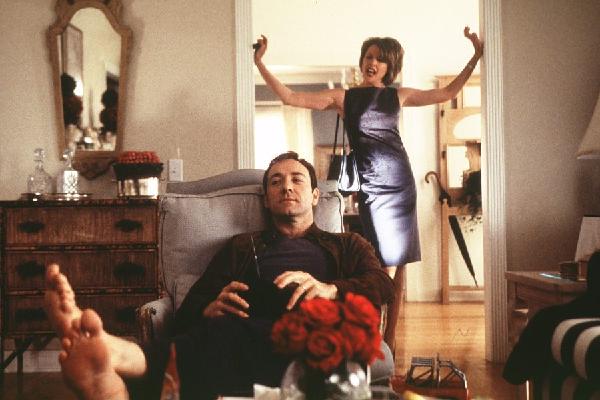
There is no doubt that inner conflict is the most difficult to relay on the screen, in-particular of it’s the main conflict in a story.  A great example of this is in the film American Beauty. is the hardest type of conflict to convey successfully in a film, if that’s the central focus of conflict in the story.

Conflict is an essential element in every screenplay, no matter what the genre.  The audience needs to see the protagonist succeed on his or her journey, but part of that success is in his or her ability to overcome every obstacle and to beat continual conflict in the story.

William Shakespeare’s Hamlet is all about internal conflict.  Hamlet is in a war with his conscience and his inner conflict is actually resolved as he is dying, when he realizes that his mother wasn’t a part of planning his father’s death.


So, as you’re writing your story, REMEMBER  as important as it is to create conflict to move your story along,  so too must you create a main obstacle that your protagonist (hero) will struggle to overcome.

Friday, January 17, 2014

August: Osage County (Film vs. the play)


Sometimes theatrical plays don’t translate well onto the screen.  I suspect, based on my reading of the play (I have not seen the production), that this might be the case with Tracy Letts Pulitzer Prize-winning play, August: Osage County, vs. his movie adaptation.

In the play, the first line of the prologue is revelatory. “Life is very long…” (10) This intensely dark comedy epitomizes the term “baggage” with the unfolding of every single character within the play, and Letts uses their dysfunctional personal and interpersonal dynamics to set the tone in the storyline, which drives the plot forward.  This is certainly the case in the film as well.  The audience is told that life is long against a backdrop of miles flat Oklahoma fields–fields that seem to go on forever.

There is no doubt that Meryl Streep lives up to her reputation, and executes a brilliant performance playing Violet, the cancer-laden, vicious, pill-popping, abusive, bitter Weston family matriarch. This untamed shrew is at the helm of her entire family’s extreme dysfunction.  Despite the amazing performances by Streep, and even with the all-star cast in this adaptation, the film has some issues.  Let’s start with the fact that the trailer sets this film up as a comedy, but in no way is this storyline comedic, in fact, it is epitomizes that worst kind of individual and family dysfunction.  It’s brutal.
Image
Violet, who suffers from mouth cancer, spews venomous words in rapid fire against every member of her family–to include her daughters, following her husbands suicide.  Violet is toxic and overbearing; she is nothing short of a monster. Her “truth-telling” takes sharing and disclosure to a new level. Julia Roberts plays her eldest daughter Barbara, who is the acorn that didn’t fall too far from the tree.  Roberts also delivers a stunning performance, but having two characters that are this “large,” seems to take away from the  intensity of the other.  Even though I’ve not had the pleasure of seeing August Osage County on stage, I can’t help but believe these two characters, in particular, would be better slated for the stage than the screen.

Some of the themes so present in the play are muddied when adapted over into a film.  Such as the disconnect present in a family who are aimlessly going through the motions of life, and none of them are on the same page. At times, it felt contrived.  Also, the dinner-table scene goes on and on, and is somewhat stifling.
At the core, this story is about abuse, and generational abuse shared between all the women in this family, and all of the many skeletons that are in their closets.