Showing posts with label creative writing. Show all posts

Thursday, February 13, 2014

The Power of Want: A Look At Creating Believable Characters

Creating believable and interesting characters is an important part of writing.  While it is not as important as the plot, it is undeniably crucial.

The power of “want” is necessary for every character, and even more essential for the protagonist.  Want is the pre-cursor for action.  Without desire, a character will not convincingly respond or act.   The protagonist is essentially driven by their need or desire. This can be physical, emotional, financial, conscious or even unconscious, and always evident to an audience.  In addition, the protagonist’s desire must be believable.  In the book Story, author Robert Mckee says, “The protagonist’s characterization must be appropriate.  He needs a believable combination of qualities in the right balance to pursue his desires.”  Such qualities are an amalgamation of character and characterization — it’s what makes the character appear human.  The spectrum is wide and encompasses attributes like:  personality quirks, values, attitudes, speech, sexuality, age, intelligence, etc.  While these attributes are helpful in building the uniqueness of a character, these traits are not character.  Character is revelatory.  “At the heart of his humanity, what will we find?  Is he loving or cruel? Generous or selfish?  Strong or weak?  Truthful or a liar?  The only way to know the truth is to witness him make choices under pressure to take one action or another in the pursuit of his desire. The interesting thing about this creative reality is that a protagonist does not necessarily have to be a nice guy (we’re talking flawed), but he will be a transformed guy in the end.

In the real world people respond according to desire or need.  For example, the guy across the street recently got stuck at the supermarket.  After trying to reach his wife, he called a neighbor to see if he could get a lift back to his house.  He had a need, and that need prompted him to call his neighbor.  It is imperative that a writer create a character that not only has a need, but who has the ability to pursue his or her need convincingly.  Simply put…if it is not true to life, an audience will never buy it.  McKee says, “An audience has no patience for a protagonist who lacks all possibility of realizing his desire.”  Part of the reason this holds true is because the audience must connect with the protagonist.  There is something within this character that the audience relates to.  McKee believes a protagonist should be both sympathetic and empathetic.  “Deep within the protagonist the audience recognizes a certain shared humanity (…) there’s something about the character that strikes a chord.”  Because of this, the audience wants the character to get what he needs or desires.  This connection with the protagonist is paramount, if it isn’t present, the audience will not connect with the character, and possibly get bored.  When we identify with the protagonist and his need, we inadvertently root for the fulfillment of our own desires.  Even if an audience does not care for the protagonist, if they recognize a certain shared humanity, they will connect.

Part of the reason that want/desire is vital for the protagonist is because a story cannot be told about a protagonist who isn’t driven by desire or need.  That is what will cause him/her to make decisions [good or bad]. The power to choose actually helps the character to arc.  It really does not matter what the need or want is, but this character must possess the power to go after his or her want [take action], which will ultimately cause some sort of transformation.  Plain and simple…the audience needs him to win!

Think of some of your favorite characters.  Guaranteed, they all desire or need something.  Remember the movie, Harry Potter and the Sorcerer’s Stone?  An orphan, brought up by his aunt and uncle, Harry has issues with inferiority and a lack of confidence, which makes him timid.  However, as the story progresses, and he becomes a powerful wizard, it never goes to his head, nor does he use his powers in a selfish and controlling way. Once he acquires the magic stone, he does not want to use it to acquire more power, but he desires to protect it from getting into the wrong persons hand.  Harry is humble and noble, and his desire is what makes him such a endearing and believable hero.

Saturday, February 8, 2014

When a story comes together in a film...well, it's

MAGICAL!!!


The story is about the making of Walt Disney’s Mary Poppins, and how Disney wooed author P.L. Travers to allow him to make a film about her “magical” nanny.  As expected, Emma Thompson (P.L.Travers) and Tom Hanks (Walt Disney) give absolutely wonderful performances.  The author juxtaposes the unbending, surly personality of P.L.Travers’ character, against warm-hearted, passionate and determined Walt Disney, and it works well in the storyline.  Of course, while the film’s final scene between Disney and Traver’s is endearing and heart-warming, it is completely embellished.  The real story portrays a very unhappy Travers over the final outcome of the film, and it appears Disney and Travers end things on a very sour note.However, the film keeps the moment magical, and it works. Our hearts are lifted, and we (the audience) are contented.saving-mr-banksSaving Mr. Banks manages to weave together two separate stories: the story of Ginty, an eight-year-old Australian girl and her relationship with her father, Travers Goff (Colin Farrell).  Ginty and her father have a unique, close-knit, loving relationship that is dramatically affected by his love for the bottle.  When his life is cut short, and he dies, Ginty’s life is forever affected. The bulk of the narrative is Disney’s pursuit of the story, and the things that transpire once Travers is flown to Los Angeles to meet the writers (screenwriting and songwriting) who hope to take the Mary Poppins’ stories and adapt them for the screen.

From the time Travers arrives in Los Angeles, she is uncomfortable and unyielding, in fact, the only one who is really able to crack through her hard-hearted shell, is the friendly limo driver (Paul Giamatti) provided by Disney.  He touches the heart of Travers; something that Disney is really never able to do.  She is taken off-guard, as he gives her the grand tour of L.A. and takes her to Disneyland.  Her relationship with the driver is sincere and gives us a sense of “who” Travers “really” is, when she is normally complex, irritable, and very difficult to deal with.  Giamatti’s relationship with Travers is endearing and uplifting.


One of the biggest issues with the script, is the continual flashbacks from the present (life in the 60′s) to Ginty’s troubled childhood in Australia. These flashbacks are used to slowly unveil the complexities that surround Travers and her icy personality.   Flashbacks are tricky and can often be risky, but somehow, they work in Saving Mr. Banks.  Eventually, the audience is made aware of “why” Travers is so protective over her work; it is related to her need to protect her father.  Knowing this history gives the audience a greater understanding and appreciation for Travers.  We become engaged, and we care about this character. It’s powerful when the audience cares about the protagonist.colin-farrell-saving-mr-banks-gintyNo doubt, Saving Mr. Banks is well-worth seeing.  It encapsulates the word, “entertainment,” and makes the heart glad.  <3Travers is not easy won, which really adds to the complex scope of her character.  She is cold, indifferent, calloused, and clearly flawed.  Screenwriters Kelly Marcel and Sue Smith did a great job of jarring the audiences emotions with this character, and Thompson gives a rave performance.
The film is actually more about struggle than anything else.  While we “think” it’s about how Mary Poppins was made, it’s really much more than that.  Both Travers and Disney had troubled childhoods.  Disney choose fantasy as a way to ease his own past and conquer his demons, where Travers plummeted herself into her books about a magical nanny–a nanny that would simple whisk heartache and care away.  Travers looks at the world through hardness and disappointment, and Disney creates a new world–a happy place to shield himself from pain.  It’s a compelling comparison.

For those of you who haven’t yet seen Saving Mr. Banks, I highly recommend it.  Based on the true story of P.L. Travers, author of the Mary Poppins children’s books, Saving Mr. Banks promises to entertain, prod emotion, and warm the heart.

goff


Saturday, January 18, 2014

Conflict and obstacles: Driving forces in a screenplay

A story without conflict is a story that’s going nowhere.

Did I just say that?  I did.

The bottom line…if there’s no dramatic conflict, there’s no drama.  Even in comedy (which is drama with a twist), there is conflict. Remember the comedy The Hangover?  It’s conflict haven! While the film itself doesn’t do much for me, it is certainly filled with conflict and obstacles.


Now, I should probably share that conflict is not really the same thing as an obstacle.  By definition, conflict is: an argument, a disagreement (often long-lasting), a conflict of interests, a clash of opposition (like wishes or needs), a dispute, a quarrel, a struggle, warfare, etc.  Obstacle is:  a thing that blocks one’s way or hinders one’s progress. Such as an obstacle to achieving a goal.

In a screenplay, an obstacle is any resistance to the main characters want or desire.  Now, want or need creates action, so it’s imperative that you define your character’s need early-on.  When obstacles occur and work against each other, they create dramatic conflict, and this is GOOD!  Here is a life example: The roofer’s ladder fell over and he has to go to the restroom in the worst possible way. All of the other roofers have gone to lunch, and he is alone.  He has a need, but the obstacle is the ladder that fell over.  What’s he going to do?  Yell, scream, try and find another way down… This roofer’s need motivates him to ACT and over-ride the obstacle.  Obstacles can be prodded by other people or by circumstances.  In the case of the roofer, his circumstance was the obstacle.

As a screenwriter, you have to inject conflict into your script to keep the action moving along so the audience will remain interested.  Conflict is most important when it stands in the way of the protagonists success and/or transformation. In other words, what is trying to keep your hero from succeeding?  The use of conflict and obstacles in a screenplay are immensely important, in fact, dramatic conflict (motivation vs. obstacle) is the very thing that drives the story.  Conflict creates dramatic tension.

Elizabeth English, founder of the Moondance Film Festival in Colorado says, “There are five distinct types of conflict that can be used in screenwriting. Inner or personal conflict, relational conflict, social or local conflict, situational conflict, and universal or cosmic conflict. All five types of conflict can be in a single screenplay, and can involve most, if not all of the characters, interacting with each other and with the protagonist and antagonist(s). Conflict as the central event drives the story and the characters. Conflict in the plot structure breathes life into your story! The audience relates to your protagonist and to the conflicts he or she faces. The patterns of tension resulting from the visible and invisible forces the characters overcome create a believable reality for the film-goer, and increase the film’s impact on that audience.”

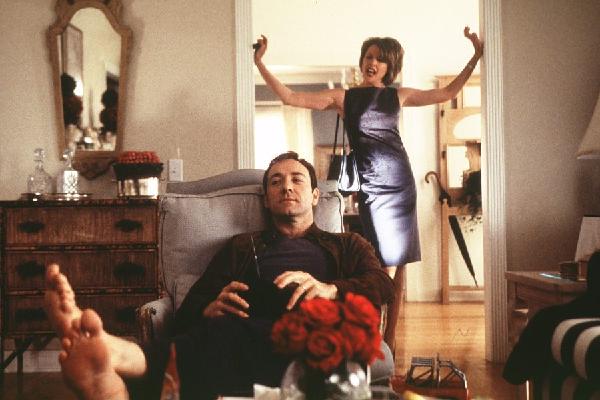
There is no doubt that inner conflict is the most difficult to relay on the screen, in-particular of it’s the main conflict in a story.  A great example of this is in the film American Beauty. is the hardest type of conflict to convey successfully in a film, if that’s the central focus of conflict in the story.

Conflict is an essential element in every screenplay, no matter what the genre.  The audience needs to see the protagonist succeed on his or her journey, but part of that success is in his or her ability to overcome every obstacle and to beat continual conflict in the story.

William Shakespeare’s Hamlet is all about internal conflict.  Hamlet is in a war with his conscience and his inner conflict is actually resolved as he is dying, when he realizes that his mother wasn’t a part of planning his father’s death.


So, as you’re writing your story, REMEMBER  as important as it is to create conflict to move your story along,  so too must you create a main obstacle that your protagonist (hero) will struggle to overcome.

Wednesday, January 15, 2014

Collaborative Writing

I’ve been writing screenplays for a long time.  Without dating myself, well over 20 years, but in all that time, I’ve only collaborated once on a script.  Well, that is until recently.  Truthfully, I don’t think it’s something  you just “do” for the heck of it.  It has to be for “all” the right reasons, and there are definitely pros and cons to working collaboratively on a project.  

Unless you are working with a writing group on a television series, then first and foremost, you must pick a writing partner that you can trust.  In addition to trust, you both need to have similar writing styles and similar goals.  Once that’s established you absolutely MUST sign a contract first, no matter what.  There are a number of things that need to be established, such as:  Who is writing what?  How much responsibility each of you share?  Will it be 50/50? What are the particulars you’re looking for?  Even if you are writing with your best friend, all the more reason to have a contract between you; if not, it could cost you your friendship.  About now, you might be rolling your eyes, assuring me (under your breath), “that will never happen.”  You know the old adage… “Never say never…”


So, as I was saying…Until now, I’ve only used a writing partner once.  It was when writing a comedy, and it was a great experience.  I do think that comedy lends itself to partner collaboration much more than drama.  Partly because comedy is so subjective.  What one person thinks is funny, another might not, and this is an important reality that can be easily explored when writing comedy with a partner. It’s a great way to test dialogue.

The truth is, collaborative writing is an intimate venture.  You have to be willing to be completely transparent, and sometimes brutally honest with your writing partner.  You also have to be able to accept criticism too.  There are a lot of odd little irritations that surface when working on a project with a partner.  However, it can be incredibly fun and rewarding, especially for the partners that have worked through all the initial kinks and established some preliminary ground rules.

So, I am now on my 3rd collaborative screenplay, and it’s (of course) another comedy.  We’ve really been having an amazing time.  It’s a lot of fun watching a writing rhythm develop with your partner.  We’re mid-way, and in a really good place.

One of the things that has really made our process productive is using the new online screenwriting program WriterDuet.  I must say, I’m IMPRESSED!  This (free) program allows us to write collaboratively, whether we’re together or apart, and we can see all of the edits immediately.  In addition to the edits, the program saves a history of all of the changes we’ve made, so if we decide we liked something previously written, we can revert back.  Another wonderful perk… WriterDuet has a page for outlining, story-boarding and creating index cards. With the flick of a finger, using the command key, we can go back and forth between our notes, and insert right into the script!

I'm sharing this with you here, because "if" you haven't purchased a screenwriting software program, WriterDuet is excellent! It has my endorsement.